Deep Work in the Age of Slack: Can We Still Focus?
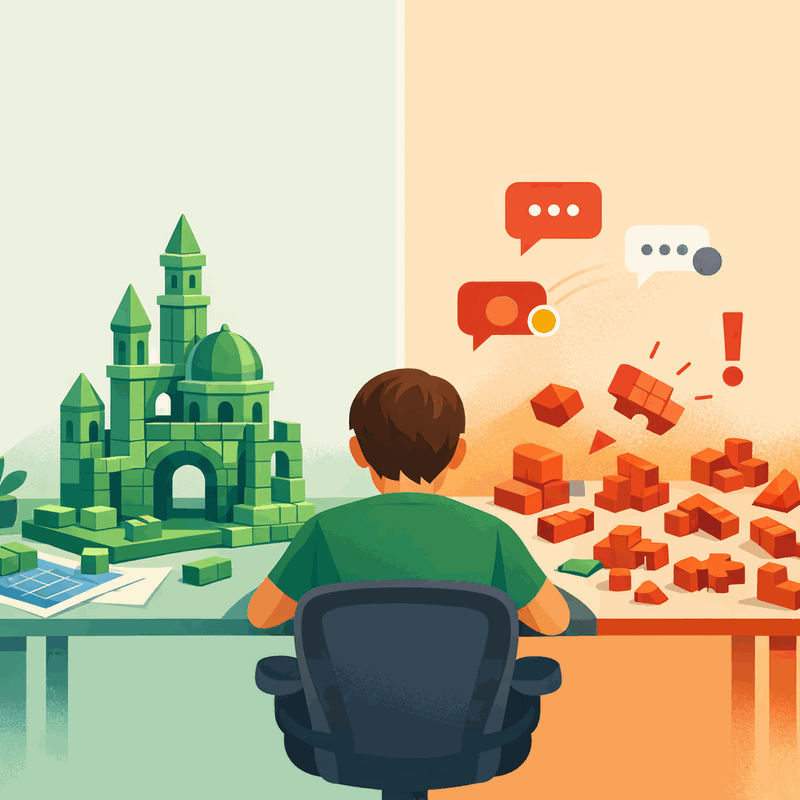
In his 2016 book Deep Work, Cal Newport made a provocative argument: the ability to focus without distraction on a cognitively demanding task is becoming rare at exactly the moment it’s becoming more economically valuable. The knowledge economy rewards people who can think deeply and produce work of genuine complexity. And yet the same knowledge economy is structured to destroy that capacity through constant connectivity, notification-driven workflows, and the cultural expectation of instant responsiveness.
Newport wrote the book before the current generation of team chat tools had fully captured the workplace. Today, in 2026, the problem he described is not just real — it’s been actively accelerated by Slack, Teams, and their many competitors. The question isn’t just whether deep work is possible. It’s whether the modern workplace is structurally designed to prevent it.
What Deep Work Actually Means
Newport defines deep work as “professional activity performed in a state of distraction-free concentration that pushes your cognitive capabilities to their limit.” This is the work that creates new value, improves skills, and produces output that’s hard to replicate. Writing a complex piece of software. Designing a product that solves a genuinely hard problem. Crafting an argument that changes how people think. The output of a 2-hour deep work session is qualitatively different from the output of 2 hours of interrupted, reactive work.
Contrast this with what Newport calls shallow work: logistical tasks, answering messages, coordinating schedules, responding to requests. Shallow work is necessary. But it produces low value per hour compared to deep work, and it can’t be batched into something more valuable just by doing more of it.
The problem in most modern workplaces is that the ratio is inverted. People spend most of their working hours in shallow work mode — available, responsive, reactive — and carve out whatever fragments of deep work they can between meetings and message threads. The most valuable work gets the least protected time.
The Slack Problem
Real-time chat tools are optimized for shallow work. That’s not a bug — it’s how they’re designed. Quick messages, quick replies, always-on presence, typing indicators, read receipts, notification badges. Every design decision in Slack is oriented toward keeping you in a state of reactive availability.
This creates what you might call a “shallow work culture by default.” When the primary communication tool operates on real-time principles, the implicit expectation becomes real-time responsiveness. Being slow to respond in Slack feels like neglecting your responsibilities, even though responding quickly to every message may mean never doing the work that actually moves the team forward.
Newport’s diagnosis was that most knowledge workers have defaulted to “busyness as a proxy for productivity.” If you’re visibly active in Slack, responding quickly, attending meetings, you appear productive — even if your actual valuable output is minimal. The chat tool rewards this appearance because engagement is what it was built to maximize.
The Deep Work Case for Engineers, Designers, and Writers
The people who suffer most from chat-driven interruption culture are precisely the people who produce the most valuable work: engineers building complex systems, designers solving hard UX problems, writers and strategists who need sustained thinking to produce something worth reading. These roles require extended uninterrupted concentration. A 20-minute focus window is barely enough to load the relevant context into working memory, let alone do anything interesting with it.
Research on programmer flow states consistently shows that meaningful progress requires 90–120 minutes of uninterrupted work. Less than that, and you’re mostly spinning up and winding down rather than actually making progress. For a designer in the middle of a complex layout problem or a writer working through a difficult argument, the numbers are similar. The work that matters most requires the most time without interruption.
“A deep work session isn’t a luxury. For an engineer or designer, it’s the minimum viable unit of meaningful work.”
Individual vs. Collective Deep Work
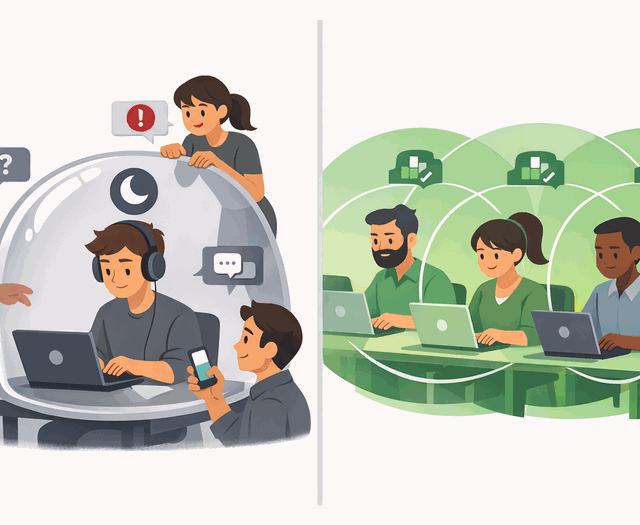
Here’s the limitation that most personal productivity solutions miss. Tools like Forest, Freedom, or Do Not Disturb modes on your phone help you personally block distractions. But they don’t change what your teammates are doing. While you’re in a focus session, your colleagues are still sending messages that expect responses. When you come out of focus mode, you face the accumulated urgency of everything that built up while you were working.
Worse: if you’re the only person on your team using focus tools, you become the bottleneck. “I sent you a message 2 hours ago and you didn’t respond” becomes a problem even though your 2-hour focus block was exactly what produced the work your team needed. Deep work requires collective buy-in. One person’s deep work habits can’t survive in a culture that doesn’t share those values — and tools that only work at the individual level can’t shift the culture.
The Tool Design Answer
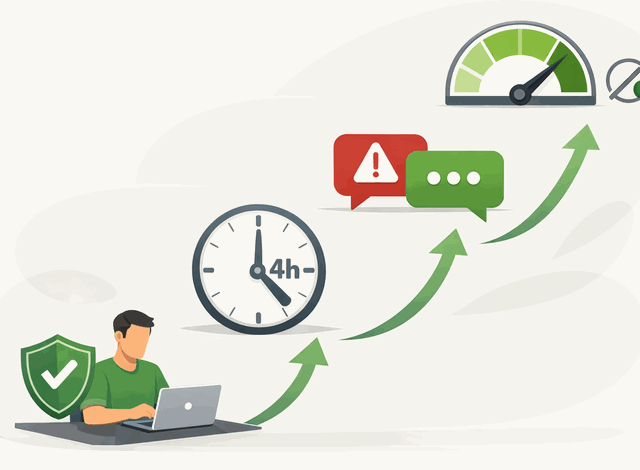
The most powerful solution isn’t willpower or personal habits. It’s tool design. A tool that batches interruptions instead of delivering them continuously changes the default experience for everyone, not just the individuals who are disciplined enough to configure their notifications correctly. When the tool’s default behavior respects focus time, the culture shifts to match.
This is the principle behind Cleariest’s Deep Work Mode. Rather than requiring each person to manage their own notification settings — which most people don’t do, and which doesn’t change team expectations in any case — Deep Work Mode is a shared signal. When you activate it, your status is visible to the team. The expectation is set: this person is in a focus session. Messages will reach them when they come out. There’s no social cost to being unresponsive, because the tool communicates your status transparently.
Building a Deep Work Culture in 2026
Culture change requires more than a tool switch. Here’s what actually moves the needle:
- Leadership models it first. When senior people visibly use Deep Work Mode, protect focus blocks, and respond on a batch schedule rather than instantly, they give everyone else permission to do the same. If leadership is always instantly responsive, the team will mirror that behavior regardless of what the policy says.
- Define response time norms explicitly. “We respond to non-urgent messages within 4 hours” is a specific, enforceable norm. “We try to be responsive” is not. Teams with explicit norms have less anxiety about response times because expectations are clearly set.
- Separate urgency channels from async channels. Create a clear mechanism for genuinely urgent communication that everyone knows to check, and reserve it for actual emergencies. This makes the regular async channel trustworthy as a non-urgent space.
- Measure output, not availability. If performance is evaluated on visible chat activity rather than actual work produced, no tool and no policy will change the culture. Managers who reward busyness get busyness. Managers who reward output get output.
One honest caveat: Cleariest isn’t magic. Deep Work Mode is a tool, not a culture transformation. If your team’s leadership doesn’t value focus time, if performance reviews reward responsiveness over output, or if team norms penalize slow responses, a chat tool can’t fix that. Culture change requires leadership buy-in and consistent enforcement of new norms. The right tool makes the change easier — but it doesn’t make the change happen on its own.
What it can do is remove the structural barriers. When the tool defaults to protecting focus rather than destroying it, the path of least resistance leads toward deep work instead of away from it. In 2026, that’s a choice teams can actually make — if they choose to make it.
Give your team room to think deeply
- Deep Work Mode is a shared signal — the whole team knows when you’re in focus
- Batched notification digests instead of continuous interruption
- Async-first design changes team expectations, not just individual settings
Related Reading
How Cleariest’s Deep Work Mode protects collective focus time.
Notification Fatigue SolutionsPractical ways to reduce notification overload for your whole team.
Slack Alternative for Deep WorkWhy teams that prioritize focus are moving away from Slack.
The Hidden Cost of Context SwitchingThe research behind why interruptions are so expensive.