Notification Fatigue: The Science Behind It and How to Fix It
Notification fatigue is real, measurable, and solvable. But most organizations treat it as an individual responsibility — when it's actually a structural problem caused by tool design and team culture. This guide covers the neuroscience, the real numbers, and the practical solutions.
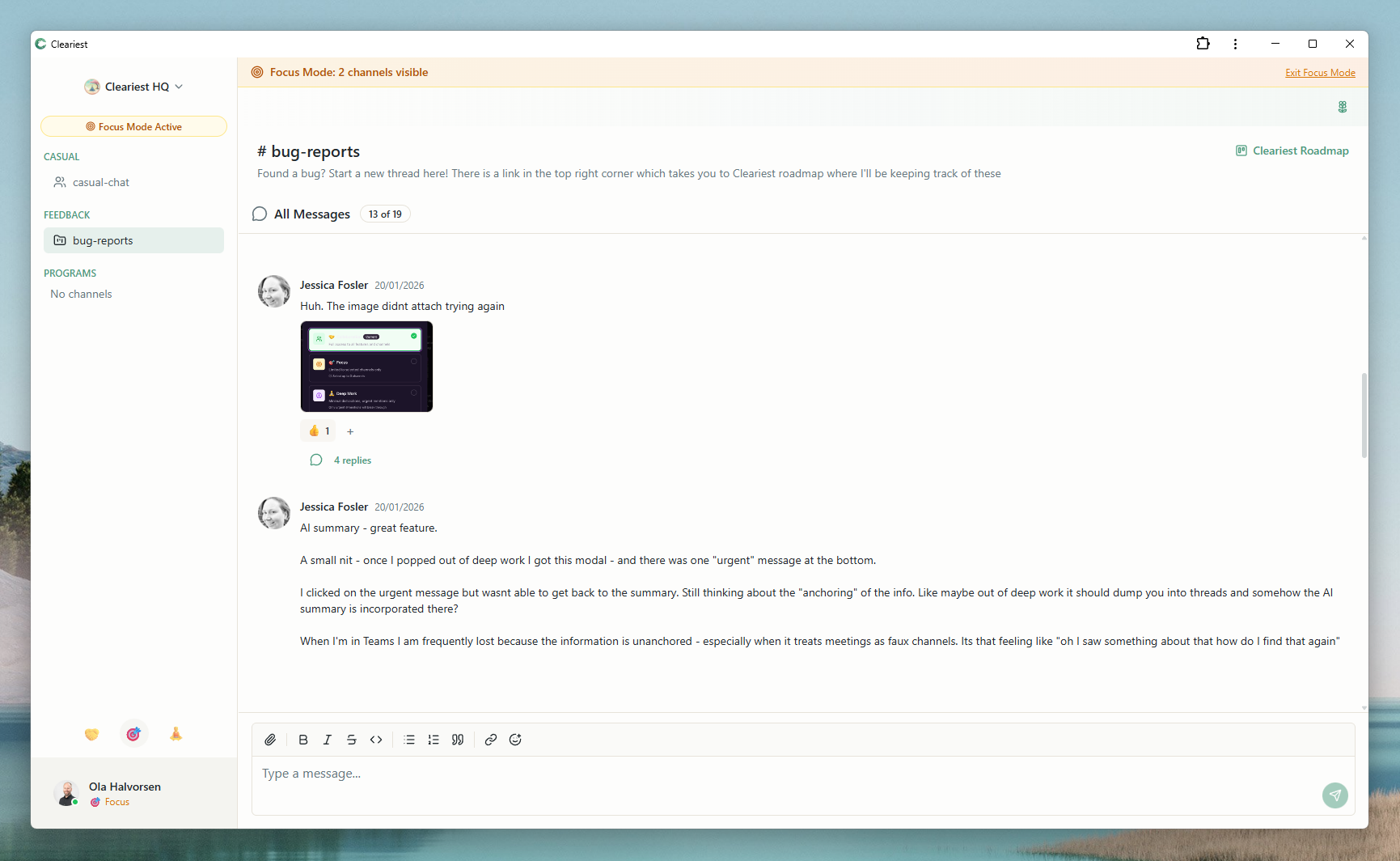
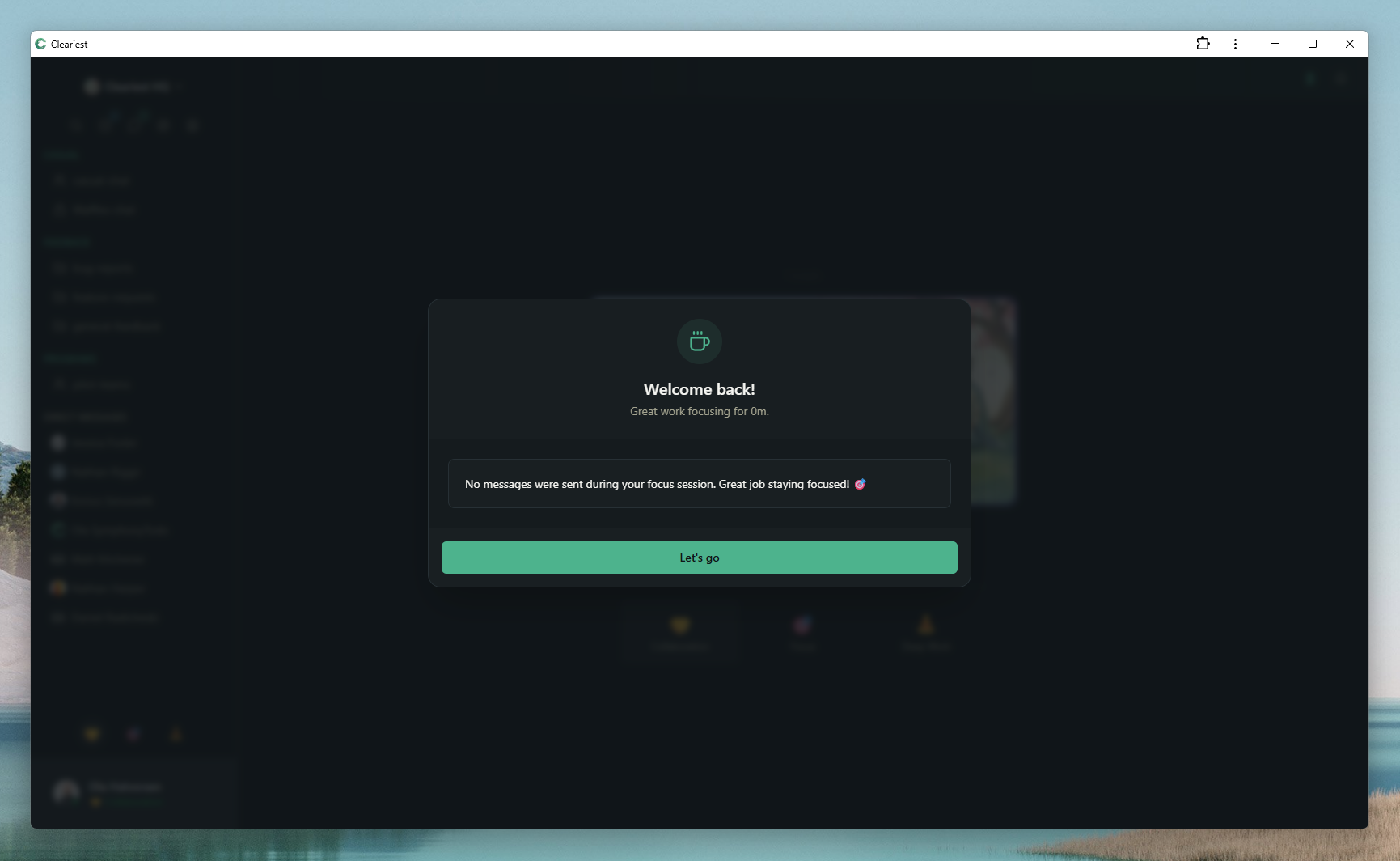
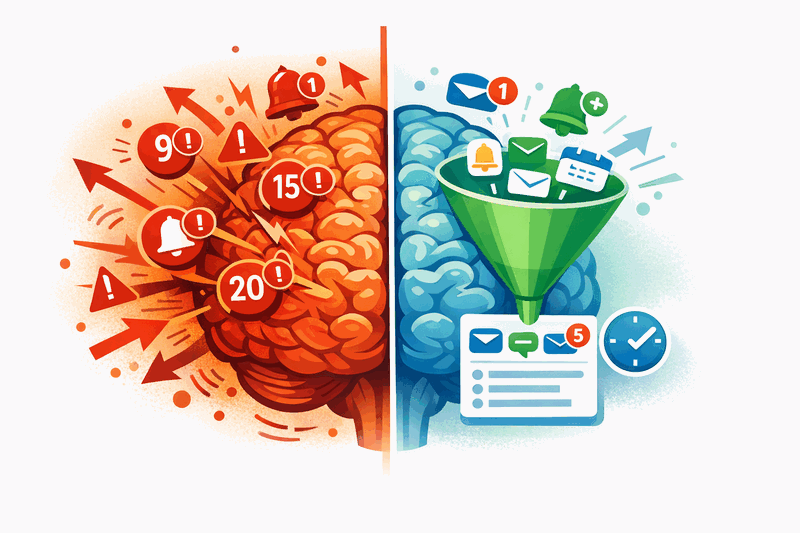
The solution to notification fatigue: focus mode silences interruptions, AI summaries batch the catch-up.
What Is Notification Fatigue?
Notification fatigue is the cognitive exhaustion that results from processing too many alerts, pings, and interruptions. It has two distinct, paradoxical effects:
Effect 1: Missing important messages
When everything is a notification, nothing is. The brain learns to tune out the constant stream of alerts, including the ones that actually matter.
Effect 2: Loss of focus
Even notifications that are checked and dismissed create cognitive interruptions. The attention cost of each ping compounds over the course of a workday.
The result is a population of knowledge workers who simultaneously miss important messages AND can't focus on deep work. This is the notification paradox: the more you have, the less effective each one is — and the more productivity damage they collectively cause.
The Neuroscience: Dopamine, Cortisol, and Attention Residue
The psychological mechanisms behind notification fatigue are well-documented in cognitive science literature.
D Dopamine: The Variable Reward Loop
Notifications are variable rewards — sometimes they contain something important, most of the time they don't. Variable reward schedules are the most psychologically compelling type of reinforcement (this is why slot machines are addictive). The brain anticipates that the next notification might be important, making them hard to ignore even when you intellectually know they're probably not. Chat tools like Slack are designed around this psychological mechanism.
C Cortisol: The Micro-Stress Response
Each notification triggers a small cortisol release — the stress hormone associated with the body's alert response. Individually, these responses are negligible. Cumulatively, across 80-100 notifications per day, the cortisol exposure is significant. Chronic elevated cortisol impairs cognitive function, memory consolidation, and emotional regulation — and contributes directly to burnout.
A Attention Residue: The 23-Minute Recovery Cost
Research by Sophie Leroy (University of Washington) introduced the concept of "attention residue": when you shift from one task to another, cognitive attention doesn't fully switch. Part of your attention remains on the previous task. The University of California, Irvine found that it takes an average of 23 minutes to fully return to a task after an interruption. A notification that takes 30 seconds to read can cost 23 minutes of cognitive recovery.
Real Numbers: The Notification Volume Problem
50–100+
Notifications per day for active knowledge workers
23 min
Average recovery time after each interruption
~2 hrs
Focus time lost per person per day from just 5 interruptions
$588B
Estimated annual cost of workplace interruptions (Gallup)
For a 10-person engineering team receiving an average of 75 notifications each per day:
- 750 total notification-interruptions per day
- Assuming half are actually checked and interrupt work: 375 true interruptions
- At 5 minutes average recovery per interruption: 31 person-hours lost per day
- At $100/hr: $3,100/day, $16,000/week, $800,000/year in lost productivity
Solutions at Three Levels
Individual Level
-
Turn off badge counts and banner notifications
Visual badges trigger checking behavior even when not audible. Disabling them reduces compulsive checking without missing messages.
-
Schedule dedicated notification check windows
9am, 12pm, 3pm. Batch your communication processing into three focused sessions rather than checking continuously. Most messages can wait 3 hours.
-
Use status messages to signal focus time
Setting a "Focusing until 11am" status reduces pings because teammates see you're not immediately available before messaging.
Team Level
-
Establish async-first communication norms
Explicitly agree as a team: "We default to public channel posts, not DMs. We respond within 4 hours, not immediately." Written norms reduce the implicit pressure to respond instantly.
-
Dramatically reduce @here and @channel usage
Mass mentions are the highest-cost notifications — they interrupt everyone simultaneously. Reserve for genuine emergencies only. For most updates, a regular channel post is sufficient.
-
Default to public channels to reduce DM volume
When information goes to a channel instead of a DM, fewer people need individual notifications. Public information has a lower per-person notification cost.
Tool Level: How Cleariest Approaches This Differently
Deep Work Mode as a first-class feature
One click activates a timed focus session. All notifications pause and are batched. This is not a hidden setting — it's prominently designed into the product as a normal work mode.
Notification batching by design
Rather than delivering each message as it arrives, Cleariest can batch notifications into digestible summaries. You get the information without the constant interruption stream.
No "always online" green dot pressure
Cleariest doesn't show a persistent online indicator that creates pressure to appear available at all times. Your presence is indicated by activity, not a permanent status dot.
AI summaries reduce catch-up anxiety
The FOMO of missing messages is a significant driver of compulsive notification checking. When you know you can get an AI summary of anything you missed, the anxiety of being away from notifications decreases.
Frequently Asked Questions
What causes notification fatigue?
Notification fatigue is caused by the cumulative cognitive load of processing too many alerts. Each notification requires a mini-decision: do I need to act on this now? Over time, this decision fatigue compounds. The dopamine loop of variable rewards (some notifications are important, most aren't) also makes notifications psychologically hard to ignore, creating compulsive checking behavior that accelerates fatigue.
How many notifications are too many?
Research suggests that productivity begins to decline significantly above 4–6 interruptions per hour. For most knowledge workers receiving 50–100 notifications per day, this threshold is exceeded before lunch. The exact number depends on the worker's role and the nature of their work — deep work roles like engineering are more sensitive than coordination roles like project management.
Can notification fatigue lead to burnout?
Yes. Each notification triggers a cortisol response — a small but real stress reaction. Multiply this by 80–100 times per day, five days per week, and the cumulative cortisol exposure contributes meaningfully to chronic stress. Combined with the attention residue effect (interruptions leave cognitive traces that impair subsequent work), notification fatigue is a significant contributor to knowledge worker burnout.
How does Cleariest reduce notification fatigue?
Cleariest addresses notification fatigue through three mechanisms: Deep Work Mode (which pauses all notifications and batches them for deliberate review), async-first design (which reduces the expectation of immediate response and therefore reduces notification volume), and public channels (which reduce DM volume by making information visible to all rather than requiring individual notification for each person who needs it).
Related Reading
Reduce Slack Notifications
Practical tactics for reducing notification volume in Slack specifically.
Deep Work Tools for Teams
Protect team-level focus time with tools designed to batch interruptions.
Focus Mode for Teams
Activate team-wide focus sessions and normalize uninterrupted work.
Reduce Meeting Overload
Meetings are another form of forced interruption. Learn how to replace them with async.
Communication Built to Reduce Notification Fatigue
Cleariest is designed with notification batching, Deep Work Mode, and async-first defaults. Give your team's attention the protection it deserves.