Knowledge Sharing in Teams: Why Information Hoarding Kills Productivity
Knowledge hoarding in organizations is rarely intentional. It's structural — a direct result of tool design that routes information into private channels and DMs by default. This guide covers why it happens, what it costs, and how to fix it structurally.
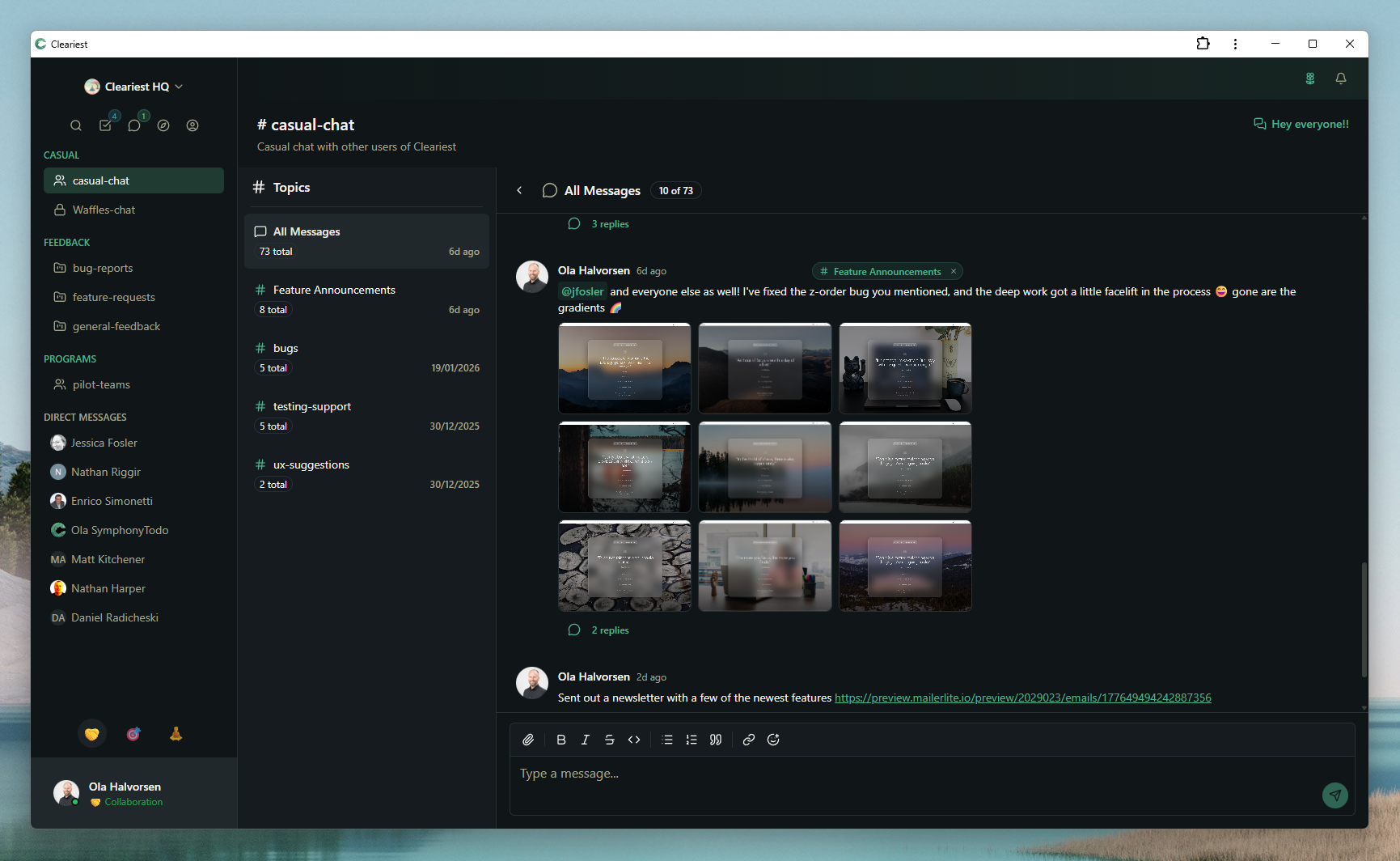
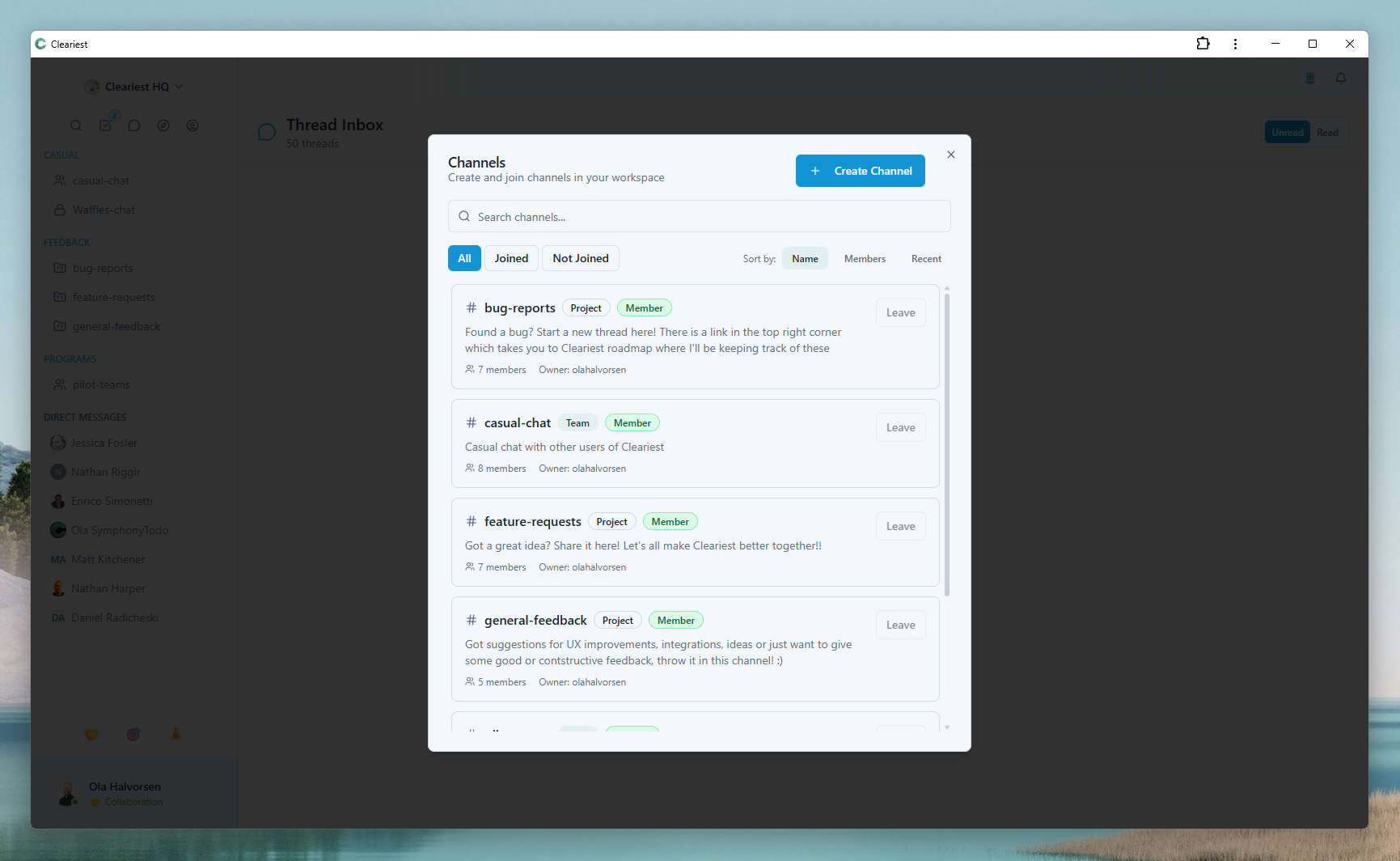
Public channels and channel discovery — making team knowledge visible and searchable by default.
How Tool Design Creates Information Silos
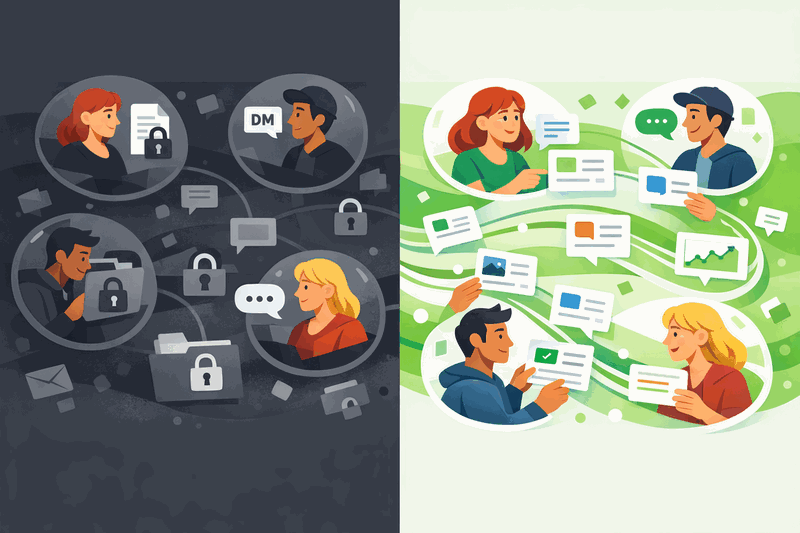
Slack's default behavior routes most communication into DMs and private channels. When two engineers discuss an architectural decision in a DM, that decision exists only for those two people. When the same decision affects three other engineers, they either need to be told separately (more DMs) or they find out later when it's implemented (confusion).
This isn't anyone's fault — it's the path of least resistance that the tool creates. DMs feel more conversational and less formal. Private channels feel safer. The cumulative effect is an organization where most knowledge is siloed in small groups, requiring constant re-explanation and creating repeated bottlenecks at the people who hold the most information.
The fix is structural, not cultural: change the tool's default behavior so that public channels are the path of least resistance, not DMs.
$47M
Estimated annual cost of knowledge silos for a 1,000-person org (McKinsey)
19%
Of workday spent searching for or re-creating information that already exists
2-4x
Higher onboarding time when knowledge is siloed in private channels
The "Bus Factor" Problem
The "bus factor" is a measure of organizational resilience: how many team members could leave suddenly before the project fails from knowledge loss? Most organizations have a bus factor of 1 or 2 for critical systems or domains.
When key knowledge lives in private channels and DMs between a small group of people, the bus factor for that knowledge is exactly the size of that group. When those people leave — and they always eventually leave — the knowledge goes with them.
Public channels don't eliminate this problem entirely — people still carry knowledge in their heads. But they meaningfully raise the bus factor by ensuring that the explicit reasoning, decisions, and discussions around key topics are permanently searchable by anyone on the team.
Public-First Channels as Passive Knowledge Sharing
The key insight about public channels is that they create knowledge sharing as a passive side effect of normal communication — not as a separate activity.
Active knowledge sharing (hard)
- Writing documentation after the fact
- Updating wikis after decisions change
- Knowledge transfer meetings when someone leaves
- Manually forwarding information to relevant people
Passive knowledge sharing (easy)
- Having discussions in public channels by default
- Conversations are automatically searchable forever
- New hires can read history without knowledge transfer sessions
- Anyone who needs context can find it without asking
Searchable Conversation History as a Knowledge Base
A well-maintained public channel history functions as a living knowledge base that never goes stale — because it's updated continuously as part of normal work.
Common questions that public channels answer without asking:
"Why did we choose React Native over Flutter?"
Search #engineering for "React Native Flutter" → find the 6-month-old thread with the full technical evaluation and decision rationale.
"When did we change the deployment schedule to Tuesdays?"
Search #devops for "deployment Tuesday" → find the thread from 8 months ago explaining the outage-driven change.
"What was the conclusion of the pricing discussion last quarter?"
Search #product for "pricing" → find the thread and pin the decision message for easy future reference.
AI Summaries for Extracting Key Decisions
Even with perfect public channel hygiene, important decisions can get buried in long threads. AI summaries make the extraction practical.
A long channel thread about an architectural decision might span 200 messages over two days. The decision itself is in there — along with a lot of tangential discussion, jokes, and clarifying questions. Summarizing that thread manually takes 30 minutes and requires someone with context to identify what's important.
Cleariest's AI summary can extract the key decision, the options considered, the reasoning for the choice, and any action items — in about 30 seconds. This makes the institutional knowledge stored in long threads actually accessible, not just theoretically searchable.
Use case: A new engineer needs to understand the history of a service they're taking ownership of. Instead of scheduling a knowledge transfer session with the previous owner, they use AI summaries to extract key decisions from the last 6 months of #engineering-[service-name] channel history. 45 minutes of reading vs. a 2-hour knowledge transfer call.
Building a Knowledge-Sharing Culture
Tool design is necessary but not sufficient. For public channels to function as a knowledge base, the team also needs psychological safety to ask questions publicly and share work-in-progress in visible spaces.
-
Psychological safety to ask publicly
If asking a question in a public channel feels risky ("everyone will see I don't know this"), people will ask in DMs instead. Leaders need to model public question-asking and normalize not knowing things.
-
Redirect DMs to channels publicly
"Hey, I got this question in a DM and I think others might benefit from the answer" — then answer in a public channel. This normalizes the redirect and trains the team on the default behavior you want.
-
Pin key decisions in relevant channels
After a significant decision is made in a thread, pin the summary message in the channel. This creates a curated index of important decisions without requiring separate documentation.
Frequently Asked Questions
What is the difference between knowledge sharing and knowledge management?
Knowledge management is the deliberate system for capturing, organizing, and distributing information — wikis, documentation systems, knowledge bases. Knowledge sharing is the cultural and structural practice of making information flow naturally between team members as part of normal work. Knowledge management requires effort; knowledge sharing happens as a byproduct when the right communication defaults are in place.
How do public channels prevent knowledge silos?
Knowledge silos form when decisions and discussions happen in private channels or DMs. Public channels prevent silos structurally: when the default is for conversations to be visible to everyone, information flows to the people who need it without anyone having to actively distribute it. New team members, cross-functional colleagues, and future hires all benefit from decisions made in public channels.
Does Cleariest have a wiki or documentation feature?
Cleariest is focused on making channel conversations themselves function as living documentation rather than adding a separate wiki layer. Searchable public channels, AI summaries, and pinned messages serve many of the functions traditionally handled by wikis — without the maintenance burden of keeping separate documentation in sync with actual decisions.
How searchable is Cleariest's message history?
Cleariest provides full-text search across all message history with no time limitations. You can search by keyword, filter by channel, and see results in context. Unlike Slack's free tier (which limits search to the last 90 days), Cleariest's full history is searchable on all plans.
Related Reading
Public vs Private Channels
The case for default-public communication and when private channels are appropriate.
Transparent Team Communication
Build a culture where everyone has context, not just those who were in the room.
Onboarding New Team Members
How public channels as living documentation accelerates new hire onboarding.
AI Chat Summaries for Teams
Extract key decisions and action items from long discussion threads automatically.
Stop Losing Knowledge to DMs
Cleariest's public-first channels make knowledge sharing the default, not the exception. Start building your team's institutional memory today.