Onboarding New Team Members: Public Channels as Living Documentation
The most common onboarding challenge is context transfer: how does a new hire understand the decisions, discussions, and culture that existed before they joined? Public channels are the most underrated solution to this problem — and most teams don't use them this way.
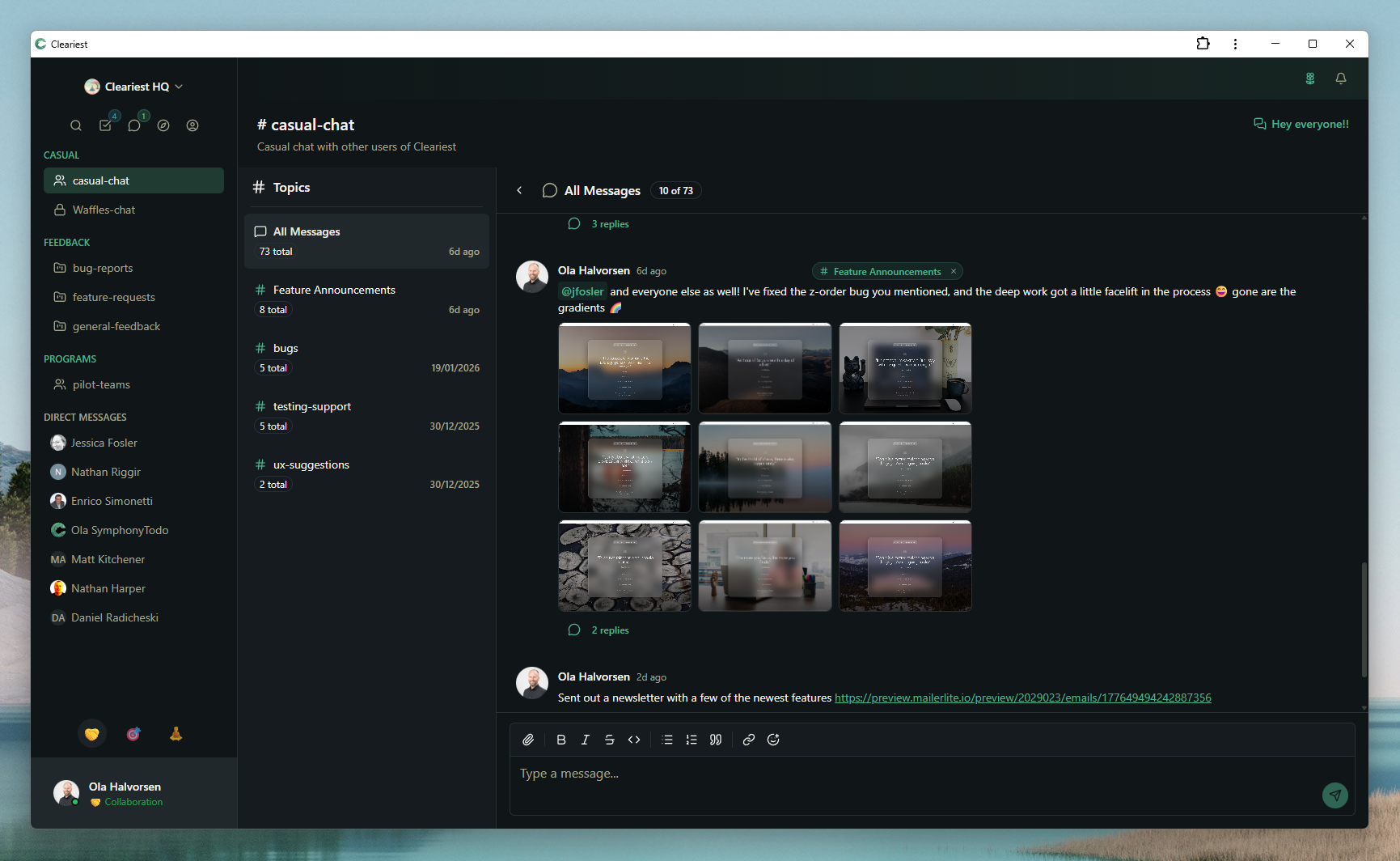
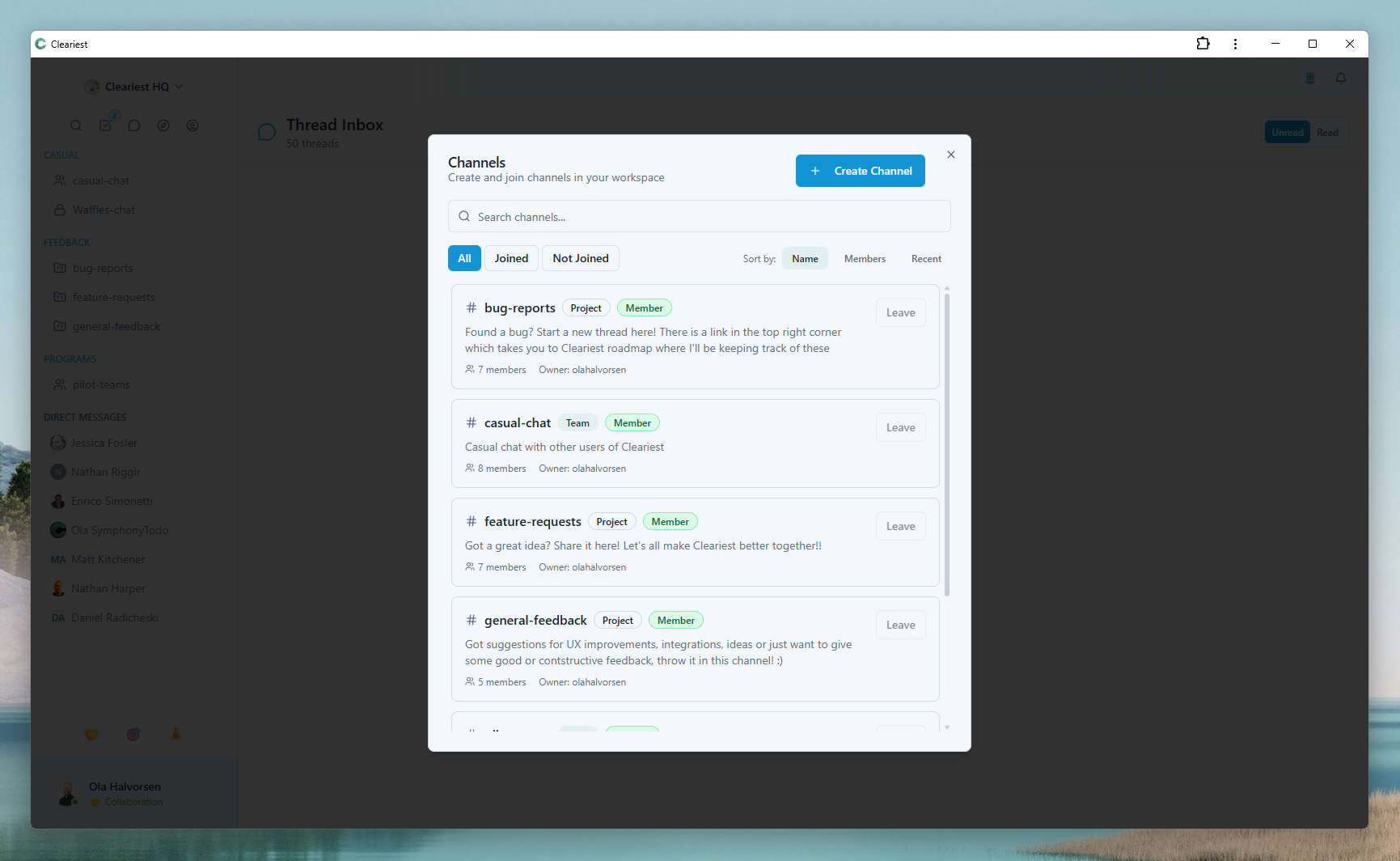
Public channels become living documentation — new hires can browse topics and discover context from day one.
The Onboarding Problem: Knowledge Locked in DMs and Private Channels
When a new engineer joins your team, they encounter a wall of implicit knowledge: why did we choose this database? Why is this module structured this way? Why do we deploy on Tuesdays? Why doesn't anyone use the #product channel?
In most organizations, the answers to these questions live in DMs between two people who were present at the time, or in private channels that new hires don't have access to. The result is a knowledge transfer problem: new hires spend weeks asking questions that take experienced teammates 20 minutes each to answer — time that could have been avoided if the original discussions were searchable.
This isn't a documentation problem. Writing documentation is a separate activity from work. It requires someone to sit down and translate decisions into a wiki. What teams really need is a communication tool that creates documentation as a byproduct of normal work.
The private-channel default problem: When Slack defaults to private channels and DMs, every decision made in those conversations is locked away from future team members. The organizational knowledge you build in year one is invisible to the hire you make in year two.
How Public Channels Create Automatic Documentation
When channels are public by default, every work conversation becomes a permanent, searchable record. This requires no extra effort — it's a structural property of how the communication is stored.
Traditional documentation
- Requires someone to write it separately from the work
- Goes stale as decisions change
- Captures "what" but not "why"
- Maintained by whoever has time (no one)
Public channel conversations
- Created automatically as part of normal work
- Always current — the conversation is the record
- Captures the "why" naturally through discussion
- Maintained by everyone, effortlessly
The "Read the Channel History" Onboarding Approach
Instead of a 2-hour onboarding call that tries to convey months of context, give new hires access to public channels and let them read. This sounds radical, but teams that do this report dramatically faster context acquisition.
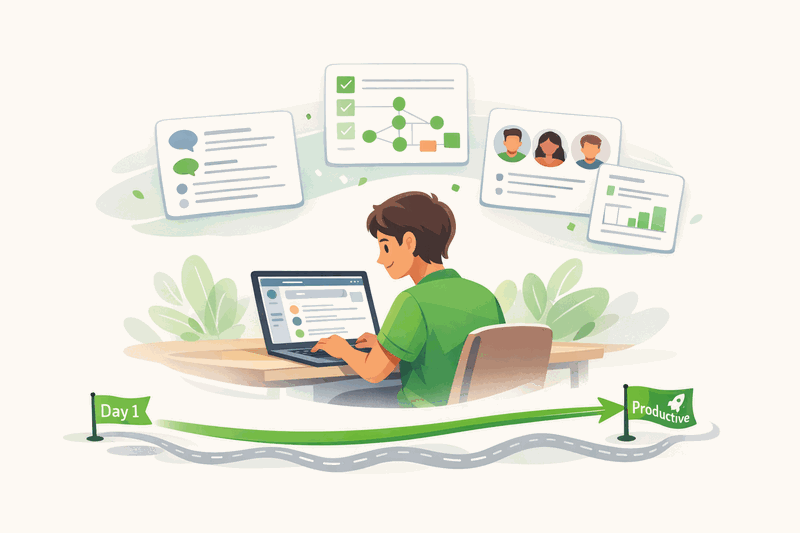
A practical first-week onboarding plan:
-
1
Day 1: Access and setup
Get added to the workspace, join all public channels, set up your profile. 30 minutes.
-
2
Days 1–2: Read channel history
Spend 2-4 hours reading #general, #engineering, #product. Use AI summaries to get overviews of long threads. Note questions for your 1:1.
-
3
Day 3: 1:1 with manager
Focused on questions that channel reading raised — not re-explaining context the new hire already has from reading. Much more efficient use of 1:1 time.
-
4
Days 4–5: Start contributing
With context from channel reading, new hires can start contributing meaningful work — questions, comments, small PRs — faster than with traditional onboarding.
AI Summaries for Catching Up on Months of Context
For a new hire joining a team that's been using Cleariest for 12 months, reading every message isn't practical. AI summaries solve this.
A new hire can request an AI summary of any channel for any time period. "Summarize #engineering for the last 3 months" produces a digest that covers:
- Key architectural decisions and the reasoning behind them
- Major features shipped and the process behind them
- Recurring discussions and unresolved debates
- Team norms and culture signals from how people communicate
What would have taken days of reading or weeks of onboarding calls can be covered in 30 minutes of summary reading followed by targeted follow-up questions.
Setting Up an Onboarding-Friendly Channel Structure
The channel structure you set up today becomes the navigation system for every future new hire. Here's a structure that works well for most small-to-medium teams.
#welcome
Introductions when someone joins. New hires post their first message here. Searchable record of every team member's arrival and background.
#general
Day-to-day team conversation, water cooler chat, links, and miscellany. High volume, high cultural signal for new hires reading the vibe.
#announcements
Important company updates, decisions, and changes. Low volume, high importance. A new hire can read all of this in an hour and understand the last year of company direction.
#engineering / #design / #product
Team-specific channels where the real work discussion happens. New hires joining their specific team start here for technical and role context.
#decisions
A dedicated channel where significant decisions get posted with context and reasoning. Even if the discussion happened elsewhere, the decision record lives here.
The Bus Factor Problem and Public Channels
The "bus factor" is the number of team members that could be hit by a bus (or leave the company) before the project fails due to loss of institutional knowledge. Most teams have a bus factor of 1 or 2 for critical decisions.
When key decisions are made in DMs between two people, or in private channels, the institutional knowledge that drives those decisions lives in those people's heads. When one of them leaves — and eventually they all leave — that knowledge walks out the door with them.
Public channels don't solve this completely — people can always take context in their heads that never made it into writing. But they dramatically raise the bus factor by ensuring that the reasoning behind decisions is documented in the channel history, accessible to anyone who joins the team later.
Practical example: A senior engineer who architected the authentication system leaves after 2 years. In a private-default tool, their reasoning for certain design choices is lost. In Cleariest with public channels, a new engineer can search #engineering for "auth" and find the discussion thread where the approach was chosen, debated, and decided — with all the context intact.
Frequently Asked Questions
How do public channels help with employee onboarding?
Public channels create a permanent, searchable record of every team decision and discussion. New hires can read channel history to understand the context behind current projects, past decisions, and team culture — without needing to schedule onboarding calls or ask teammates to re-explain things. It's like having access to the institutional memory of the team from day one.
What's the best way to onboard remote employees?
The most effective remote onboarding combines structured channel access with async self-paced learning. Give new hires access to public channels immediately, point them to key channels with context-rich history, and use AI summaries to help them quickly understand months of conversation. Supplement with a few synchronous 1:1s for relationship building — but let the channel history do the heavy lifting of context transfer.
How long does it take a new hire to get up to speed with Cleariest?
New hires typically feel meaningfully informed after 2–3 days of reading public channel history, compared to 2–4 weeks of onboarding calls and documentation hunting in tools with private-first defaults. The exact timeline depends on team size and channel volume, but AI summaries significantly accelerate the catch-up process.
Are there privacy concerns with public channels?
Public channels in Cleariest are public within your workspace — not public to the internet. All team members can see the content, but external parties cannot. Private channels still exist for genuinely sensitive topics: performance discussions, personnel matters, and confidential business decisions. The goal is default-public for work discussions, not eliminating privacy entirely.
Related Reading
Public vs Private Channels
Why default-public communication builds stronger, more transparent teams.
Knowledge Sharing in Teams
Break down silos and stop information from being trapped in private conversations.
Transparent Team Communication
Build a culture where everyone has context, not just those who were in the room.
AI Chat Summaries for Teams
How AI summaries accelerate onboarding by making months of history digestible.
Onboard Faster with Public Channel History
Cleariest's public-first channels create living documentation that every new team member can access immediately. Start building your knowledge base today.