Reduce Meeting Overload: Async Communication That Replaces Status Updates
The average knowledge worker spends 15 or more hours per week in meetings. A significant portion of that time is spent on status updates, FYI announcements, and daily standups — all of which can be replaced with structured async communication. This guide shows you exactly how.
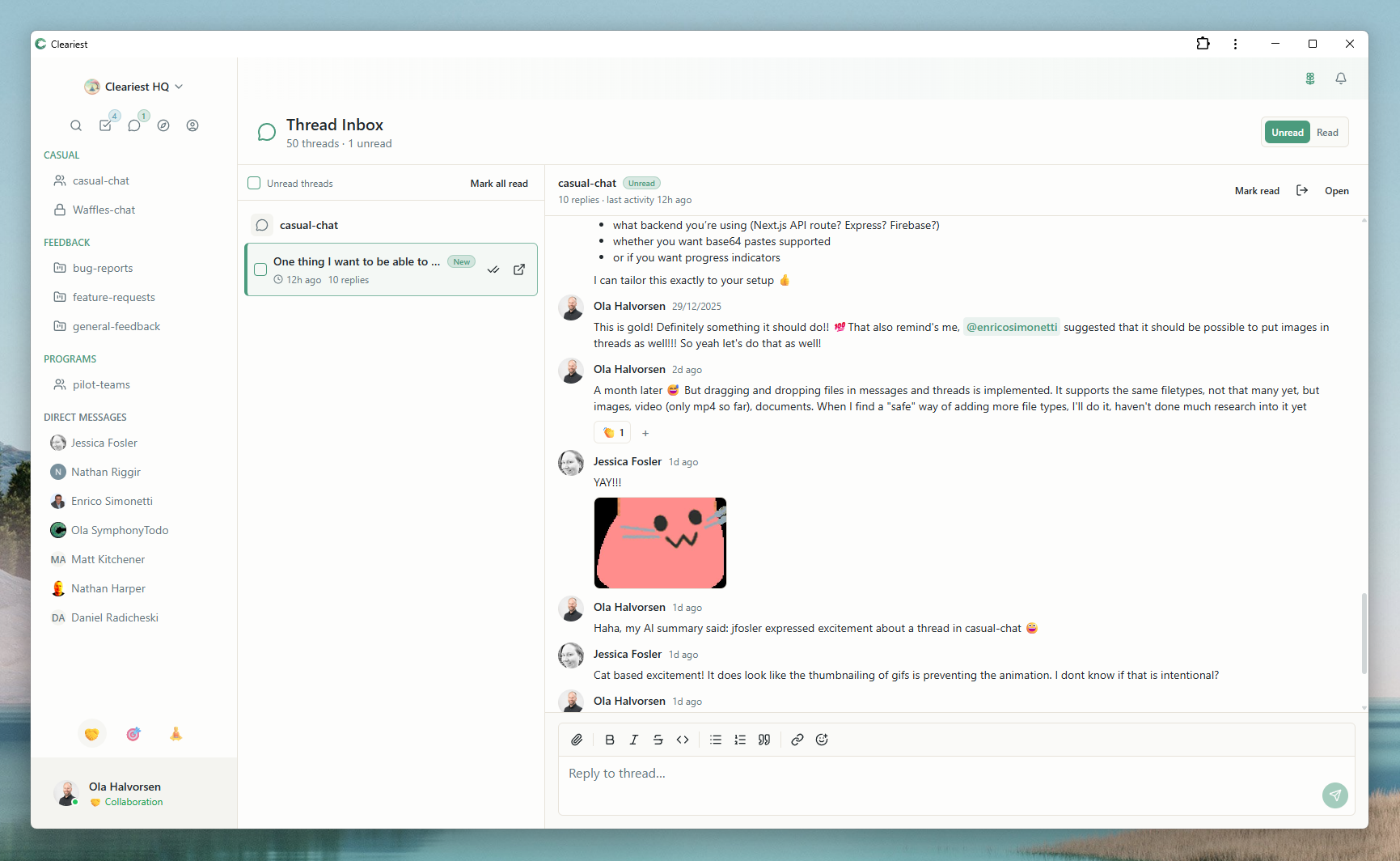
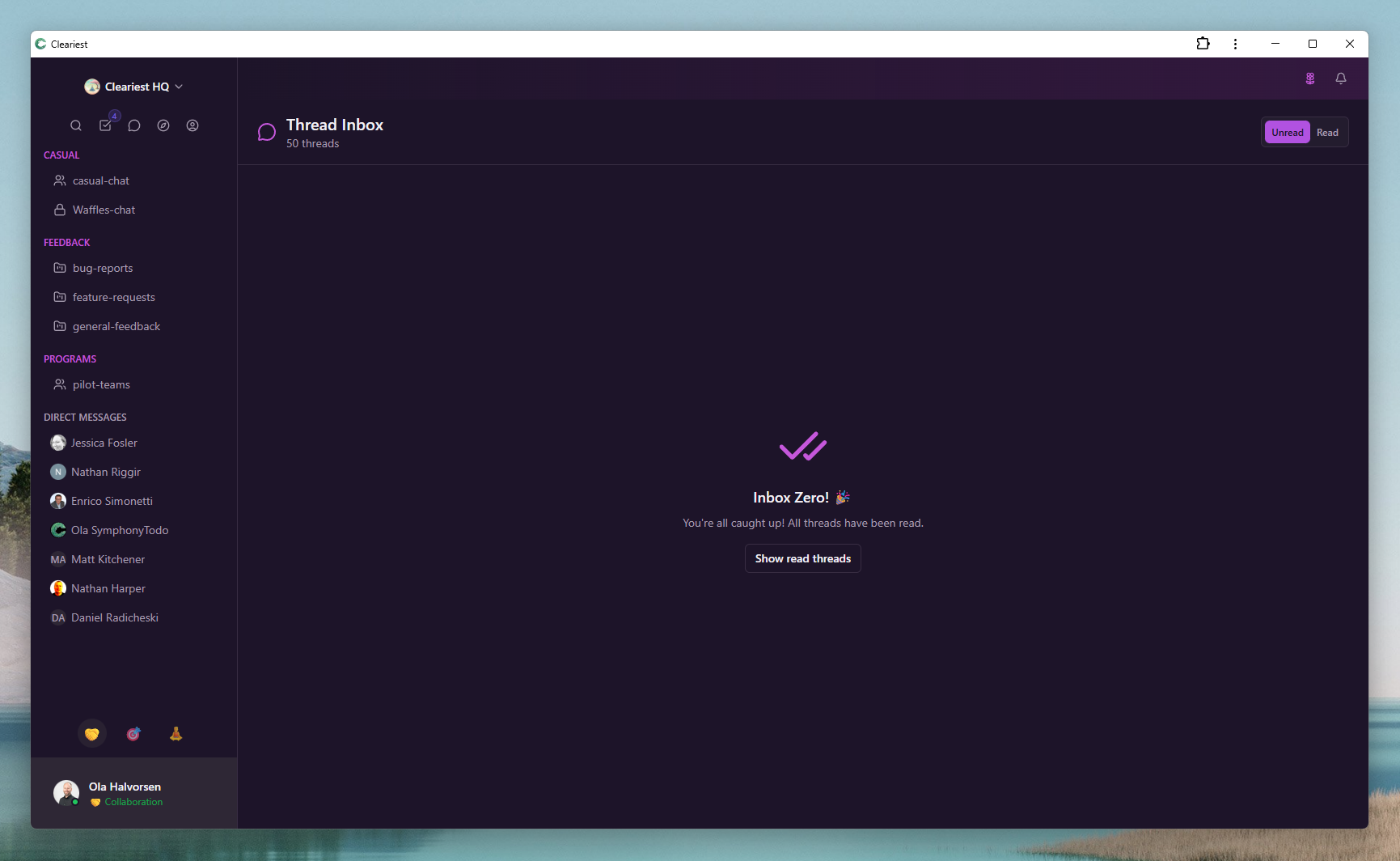
Replace status meetings with async threads and catch up at your own pace.
The Meeting Epidemic
Meetings have a cost that most organizations don't explicitly calculate. Consider the math: the average knowledge worker spends 15 hours per week in meetings. In a standard 40-hour week, that's 37.5% of total working time. For a team of ten engineers at $100/hr fully-loaded cost, that's approximately $15,000 per week — $780,000 per year — spent in meetings.
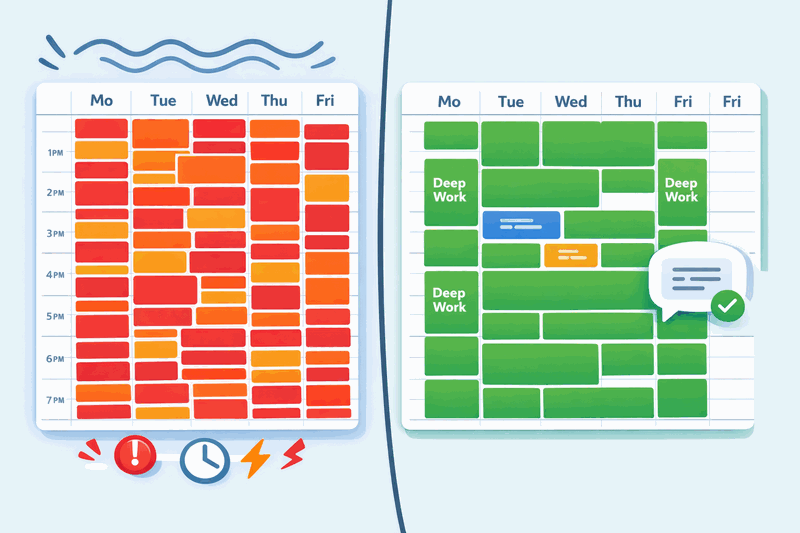
But the direct time cost understates the real damage. Meetings fragment the remaining hours. An engineer with two 30-minute meetings in the morning and two in the afternoon doesn't have 7 hours of coding time — they have four fragmented blocks of 45-90 minutes, none of which is long enough for the deep focus that hard engineering problems require.
The solution isn't to eliminate all meetings. It's to be ruthlessly honest about which meetings actually require synchronous presence and which are just habit.
15 hrs
Average meeting time per week per knowledge worker
37.5%
Of a 40-hour week spent in meetings
60–70%
Of meetings that could be replaced with async
Which Meetings Can Be Replaced with Async
The majority of recurring meetings fall into categories that are better handled asynchronously. Here are the most common meeting types and their async alternatives.
Status Update Meetings
The classic "everyone go around and say what you're working on" meeting.
Async replacement:
Pin a weekly update thread in your team channel. Each person posts their status by a set time. Anyone can read and comment asynchronously.
"FYI" Announcement Meetings
Meetings where one person presents information to a passive audience.
Async replacement:
Post to #announcements channel. Anyone who needs to can read at their own pace and ask follow-up questions in the thread.
Retrospectives
Sprint retros or project reviews that follow a structured format.
Async replacement:
Post 3 structured questions to #retro channel (What went well? What could improve? Action items?). Collect responses over 24 hours.
Daily Standups
The 15-30 minute daily check-in that often runs long and blocks mornings.
Async replacement:
Post to #standup channel using the 3-question format. Takes 2 minutes per person instead of 15-30 for the team.
Which Meetings Should Stay Synchronous
The goal is not zero meetings. Some communication genuinely benefits from real-time, synchronous interaction. Being honest about this prevents the pendulum from swinging too far.
-
Creative brainstorming sessions
When ideas need to build on each other in real time, synchronous sessions produce better results. The spontaneity of live conversation sparks connections that async threads rarely do.
-
Sensitive 1:1 conversations
Performance discussions, difficult feedback, personal challenges — these deserve the nuance of real-time conversation, video at minimum. Written text loses too much signal.
-
Complex, high-stakes decisions
When a decision requires rapid back-and-forth with many unknowns, a focused 30-minute sync can be more efficient than a 3-day async thread. Use your judgment.
-
Relationship-building touchpoints
Team cohesion doesn't build through async text alone. Intentional synchronous time for relationship building — not status updates — has real value.
How to Run Async Standups in Cleariest
The async standup is the highest-leverage single change most teams can make. It replaces a 15-30 minute daily interruption with a 2-minute written post — and produces better information, since people can think before they write.
The 3-Question Format
What did I complete yesterday?
Provides accountability and surfaces completed work to the team.
What am I working on today?
Helps teammates coordinate and spot conflicts or opportunities to help.
Any blockers or things I need help with?
The most important part — surfaces problems early so they get resolved quickly.
Example async standup post in #standup channel:
✅ Yesterday: Finished auth refactor, merged PR #214. Reviewed 2 open PRs.
🔨 Today: Starting the new onboarding flow — picking up ticket ENG-408. Draft PR by EOD.
🚧 Blockers: Waiting on design review for ENG-405. @sarah can you take a look?
AI Summaries as Meeting Replacements
One objection to async communication is that important information gets buried in long threads. Cleariest's AI summaries solve this directly.
Instead of scheduling a 30-minute sync to align on a project, post the discussion to a channel. Those who need to participate can do so at their own pace. When the thread is complete, anyone who needs to catch up can request an AI summary that extracts key decisions, action items, and open questions — in 30 seconds.
This approach removes the scheduling overhead, the timezone friction, and the "I missed the meeting" problem simultaneously. The AI summary becomes the meeting notes — without anyone having to take them.
Time savings example
Replace one 30-minute status meeting per day with async channel updates + AI summary. For a team of 8, that's 4 hours of meeting time saved daily. Over a year: 1,040 person-hours reclaimed for actual work.
The "Write It in the Channel" Culture Shift
Switching from meetings to async isn't just a tool change — it's a culture change. Teams that succeed at this have established clear norms around when to write instead of schedule.
Practical steps to shift the culture:
-
1
Cancel one recurring meeting this week
Pick the most status-update-heavy recurring meeting on your calendar and replace it with a channel post template. Send the template to the team. Watch what happens.
-
2
Define your response time expectations
If people don't know what's expected, they'll default to immediate response anxiety. Set a clear norm: "We respond to channel messages within 4 hours during working hours."
-
3
Make async the path of least resistance
Put channel templates in channel descriptions. Create a #decisions channel where choices get posted. Make writing the obvious default, not the extra effort.
-
4
Celebrate async wins publicly
"We cancelled our weekly status meeting last month and nobody noticed — updates are happening in #team channel instead." Reinforcing the wins cements the culture change.
Frequently Asked Questions
Can async really replace meetings?
Async communication can replace the majority of meetings — particularly status updates, FYI announcements, retrospectives, and daily standups. Studies suggest 60–70% of meetings could be replaced with structured async communication. What async cannot replace: genuine brainstorming, sensitive 1:1 conversations, and complex real-time problem-solving. The goal isn't zero meetings — it's intentional meetings.
What types of meetings are hardest to replace?
The hardest meetings to replace with async are those that genuinely benefit from real-time interaction: live brainstorming sessions where ideas build off each other spontaneously, sensitive personnel conversations, and complex technical problem-solving where rapid back-and-forth is necessary. These meetings should stay synchronous — but they represent a small minority of most teams' meeting time.
How do I get my team to stop scheduling unnecessary meetings?
Start by auditing your recurring meetings and categorizing each as "status update," "decision-making," "brainstorming," or "relationship-building." For every status update meeting, propose replacing it with an async channel post. Make it easy to post updates by creating a simple template. Once the team sees that async updates work, the cultural shift accelerates. Lead by example — cancel your own status meetings first.
Does Cleariest have any meeting features?
Cleariest is intentionally focused on async communication rather than adding video calls or meeting scheduling. Our philosophy is that the best meeting is one that didn't need to happen. For meetings that must be synchronous, we recommend dedicated video tools. Cleariest handles everything that should happen in writing — which is most of it.
Related Reading
Async Standup Communication
A complete guide to replacing daily standups with async channel updates.
AI Chat Summaries for Teams
How AI summaries eliminate the "I missed the meeting" problem entirely.
Remote Team Communication
Async-first practices for distributed teams across timezones.
Focus Mode for Teams
Protect deep work time after you've cleared your calendar of unnecessary meetings.
Give Your Team Their Time Back
Cleariest is built for async-first teams. Replace status meetings with public channels and AI summaries. Start free today.